Power surges are a common and potentially damaging phenomenon in electrical systems. They can occur due to various reasons, such as lightning strikes, grid switching, or the sudden activation of high – power electrical devices. As a supplier of special sockets, I have witnessed firsthand the importance of how these sockets handle power surges to protect connected devices. In this blog, I will explore the mechanisms through which special sockets deal with power surges, the features they possess, and the benefits they bring to consumers. Special Socket

Understanding Power Surges
Before delving into how special sockets handle power surges, it’s essential to understand what power surges are. A power surge is a sudden increase in voltage that lasts for a short period, typically less than a second. The normal voltage in a residential electrical system is around 120 volts (in the United States) or 230 volts (in many other countries). A power surge can cause the voltage to spike to several hundred or even thousands of volts.
These high – voltage spikes can damage or destroy electrical devices. For example, a computer’s motherboard, a TV’s internal circuit board, or a smartphone charger can be rendered useless by a single power surge. This is where special sockets come into play.
Key Mechanisms of Special Sockets in Handling Power Surges
Surge Suppression Components
One of the primary ways special sockets handle power surges is through the use of surge suppression components. The most common component is the Metal Oxide Varistor (MOV). An MOV is a type of electrical component with a nonlinear resistance. Under normal voltage conditions, an MOV has a high resistance, allowing the normal flow of current through the socket.
However, when a power surge occurs and the voltage exceeds a certain threshold, typically around 330 volts in many MOVs used in residential sockets, the MOV’s resistance drops dramatically. This creates a low – resistance path for the excess current, diverting it away from the connected electrical devices and into the ground.
Gas Discharge Tubes
Another component used in some special sockets is the gas discharge tube (GDT). A GDT contains an inert gas inside a sealed glass or ceramic tube. When the voltage across the tube reaches a certain level due to a power surge, the gas inside the tube ionizes, creating a conducting path.
The GDT can handle large amounts of current during a power surge. It is often used in combination with MOVs in high – end special sockets. The GDT takes the initial brunt of a large – amplitude surge, protecting the MOV from being overstressed. Once the GDT has reduced the surge voltage to a more manageable level, the MOV can then further suppress the remaining voltage.
Filtering Circuits
In addition to surge suppression components, special sockets may also incorporate filtering circuits. These circuits are designed to remove high – frequency noise and transient voltage spikes that are often associated with power surges.
Filtering circuits typically consist of capacitors and inductors. Capacitors can store and release electrical energy, while inductors oppose changes in current. By combining these components in a specific configuration, the filtering circuit can smooth out the electrical waveform, reducing the impact of small – scale voltage fluctuations and high – frequency noise.
Features of Special Sockets for Power Surge Protection
Multiple Outlets with Individual Protection
Many special sockets come with multiple outlets, allowing users to connect several electrical devices simultaneously. Each outlet is often individually protected by surge suppression components. This means that even if one device is affected by a power surge, the other devices connected to the same socket are still protected.
Indicator Lights
Indicator lights are a useful feature in special sockets. These lights can provide information about the status of the surge protection. For example, a green light may indicate that the surge protection is functioning properly, while a red light may indicate that the surge suppression components have been overwhelmed and are no longer providing effective protection.
Plug – and – Play Design
Special sockets are designed to be easy to use. They usually have a standard plug that can be directly plugged into a wall outlet, just like a regular power strip. This plug – and – play design makes it convenient for users to add surge protection to their electrical devices without the need for complex installation procedures.
High – Energy Absorption Capacity
The best special sockets have a high energy absorption capacity. This means that they can handle large and repeated power surges without failing. The energy absorption capacity is usually measured in joules. A higher joule rating indicates that the socket can absorb more energy during a power surge, providing better protection for connected devices.
Benefits of Using Special Sockets for Power Surge Protection
Device Protection
The most obvious benefit of using special sockets is the protection of electrical devices. By diverting excess current and suppressing voltage spikes, special sockets can prevent damage to costly electronics such as computers, televisions, gaming consoles, and home appliances. This can save consumers a significant amount of money in replacement costs.
Extended Device Lifespan
Power surges can cause cumulative damage to electrical devices over time, even if the damage is not immediately apparent. By using special sockets to protect devices from power surges, the lifespan of these devices can be extended. For example, a computer that is regularly exposed to power surges may experience component failures earlier than one that is protected by a special socket.
Peace of Mind
Knowing that electrical devices are protected from power surges gives consumers peace of mind. Whether it’s during a thunderstorm or in an area with an unstable power grid, special sockets provide an added layer of security. Consumers can use their electrical devices without worrying about the potential damage caused by sudden voltage spikes.
Choosing the Right Special Socket for Your Needs
When choosing a special socket, several factors should be considered. First, the joule rating is an important parameter. As mentioned earlier, a higher joule rating means better surge protection. For high – value electronics such as home theaters or desktop computers, a socket with a joule rating of at least 1000 joules is recommended.
Second, the number of outlets is a practical consideration. If you need to connect multiple devices, choose a socket with enough outlets. Also, make sure that each outlet is individually protected.
Finally, check for additional features such as indicator lights and filtering circuits. These features can enhance the functionality and reliability of the special socket.
Conclusion
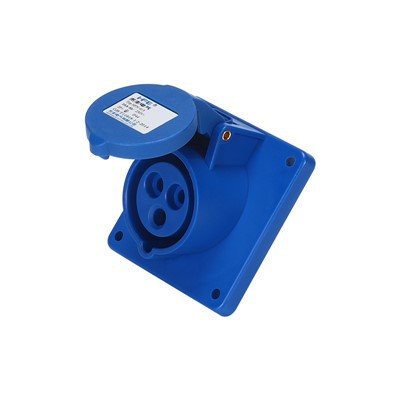
In conclusion, special sockets play a crucial role in handling power surges and protecting electrical devices. Through the use of surge suppression components such as MOVs and GDTs, filtering circuits, and other features, they can effectively divert excess current and suppress voltage spikes. The benefits of using special sockets, including device protection, extended device lifespan, and peace of mind, are significant.
Panle Mount Industrial Socket If you are looking for reliable power surge protection for your electrical devices, I invite you to contact us to discuss your specific needs. Our team of experts can help you choose the right special socket for your situation. Whether you are a homeowner, a business owner, or an installer, our special sockets can provide the protection you need.
References
- Horowitz, P., & Hill, W. (1989). The Art of Electronics. Cambridge University Press.
- Dorf, R. C., & Swartz, J. A. (2008). Introduction to Electric Circuits. Wiley.
- National Electrical Code (NEC). (2020). Published by the National Fire Protection Association.
Zhejiang Hefeng Electric Co., Ltd.
Address: Wenzhou Daqiao Industrail Park, Beibaixiang Town, Yueqing City, Zhejiang Province, China
E-mail: hefengplug@chinahfe.com
WebSite: https://www.hfcee.com/
