Ultrasonic tank level sensors are widely used in various industries for measuring the level of liquids within tanks. One common question that often arises is whether these sensors can detect the presence of foam on the liquid surface. As a supplier of ultrasonic tank level sensors, I will delve into this topic, exploring the principles behind ultrasonic sensors, the challenges posed by foam, and the capabilities of our sensors in dealing with this issue. Ultrasonic Tank Level Sensor
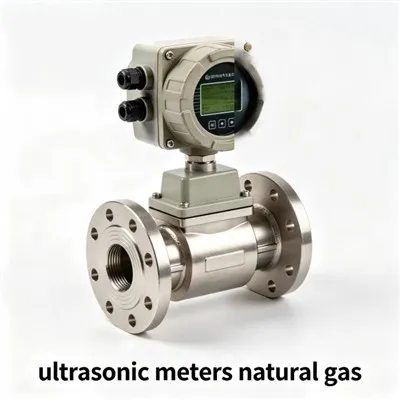
Understanding Ultrasonic Tank Level Sensors
Ultrasonic tank level sensors operate based on the principle of sending ultrasonic waves towards the liquid surface and measuring the time it takes for the waves to bounce back. The sensor emits a high – frequency sound wave, which travels through the air above the liquid. When the wave hits the liquid surface, it is reflected back to the sensor. By knowing the speed of sound in the air and measuring the time of flight of the ultrasonic wave, the sensor can calculate the distance between the sensor and the liquid surface, and thus determine the liquid level.
The formula for calculating the distance (d) from the sensor to the liquid surface is given by (d=\frac{v\times t}{2}), where (v) is the speed of sound in air and (t) is the time it takes for the ultrasonic wave to travel to the liquid surface and back.
The Challenge of Foam
Foam presents a unique challenge for ultrasonic tank level sensors. Foam on the liquid surface is a collection of bubbles, which have a very different acoustic impedance compared to the liquid itself. Acoustic impedance is a measure of the resistance that a medium offers to the propagation of sound waves. When an ultrasonic wave encounters foam, it can be scattered, absorbed, or reflected in multiple directions.
The presence of foam can cause inaccurate level measurements. If the ultrasonic wave is scattered by the foam, it may not reach the actual liquid surface, or only a fraction of the wave will return to the sensor. This can lead to false readings, where the sensor measures the level of the foam instead of the liquid beneath it. In some cases, the scattered waves can cause interference and make it difficult for the sensor to accurately detect the reflected wave.
Our Ultrasonic Sensor’s Capabilities
At our company, we have developed advanced ultrasonic tank level sensors that are designed to address the issue of foam. Our sensors are equipped with sophisticated signal processing algorithms. These algorithms are able to distinguish between the reflections from the foam and the reflections from the actual liquid surface.
One of the key features of our sensors is their ability to analyze the characteristics of the reflected signals. Foam typically produces a more diffuse and weaker reflection compared to a solid liquid surface. Our sensors can detect these differences in the signal strength and pattern. For example, the reflected signal from a liquid surface is usually a sharp and well – defined peak, while the signal from foam is more spread out and has a lower amplitude.
We also use multiple echo detection techniques. Instead of relying on a single echo, our sensors analyze multiple echoes that are received after the initial transmission of the ultrasonic wave. This allows the sensor to build a more comprehensive picture of the environment above the liquid. By comparing the different echoes, the sensor can identify the true liquid surface even in the presence of foam.
In addition, our sensors have adjustable settings for sensitivity and filtering. The sensitivity can be adjusted according to the specific application and the expected amount of foam. By increasing the sensitivity, the sensor can better detect the weak reflections from the liquid surface through the foam. The filtering settings can be used to remove unwanted noise and interference caused by the foam.
Real – World Applications
Our ultrasonic tank level sensors have been successfully applied in many industries where foam is a common issue. In the food and beverage industry, for example, during the fermentation process, foam can form on the surface of the liquid in the tanks. Our sensors are able to accurately measure the actual liquid level beneath the foam, ensuring proper monitoring and control of the production process.
In the chemical industry, certain chemical reactions can generate foam. Our sensors provide reliable level measurements, allowing operators to manage the chemical processes safely and efficiently. In wastewater treatment plants, foam is often present on the surface of the water in treatment tanks. Our sensors can accurately detect the water level, which is crucial for the proper operation of the treatment system.
Case Study
Let’s take a look at a real – world case study. A brewery was experiencing problems with inaccurate level measurements in their fermentation tanks due to the presence of foam. They were using a traditional level sensor that was unable to distinguish between the foam and the liquid. As a result, they were having difficulties in controlling the fermentation process and estimating the amount of beer in the tanks.
After installing our ultrasonic tank level sensors, the situation improved significantly. Our sensors were able to accurately measure the liquid level beneath the foam. The brewery was able to optimize their fermentation process, reduce waste, and improve the overall quality of their beer. The operators could now rely on the accurate level measurements provided by our sensors to make informed decisions about the production process.
Conclusion
In conclusion, while foam does pose a challenge to ultrasonic tank level sensors, our advanced sensors are capable of detecting the presence of foam and accurately measuring the liquid level beneath it. Through the use of sophisticated signal processing algorithms, multiple echo detection techniques, and adjustable settings, our sensors can overcome the difficulties associated with foam.
Optical Level Sensor If you are facing challenges with level measurement in the presence of foam, or if you are looking for a reliable ultrasonic tank level sensor for your application, we are here to help. Our team of experts can provide you with detailed information about our products, and we can work with you to find the best solution for your specific needs. We invite you to contact us to start a discussion about your requirements and how our ultrasonic tank level sensors can benefit your business.
References
- "Ultrasonic Sensor Technology: Principles and Applications" – A technical handbook on ultrasonic sensors.
- "Level Measurement in Foamy Liquids" – A research paper on the challenges and solutions for level measurement in the presence of foam.
Shenzhen Fineherc Technology Co., Ltd.
As one of the most experienced ultrasonic tank level sensor suppliers in China, we’re featured by quality products and low price. Please feel free to buy discount ultrasonic tank level sensor made in China here from our factory. Welcome to view our website for more information.
Address: 5th Floor, Building D, No. 39, Keji East Road, Torch Development Zone, Zhongshan City,China
E-mail: fineherc@hotmail.com
WebSite: https://www.fineherc.com/
