If you’ve ever walked through a bustling warehouse at 2 a.m., you’ve probably seen a palletizing robot at work—its mechanical arm moving in slow, precise arcs to stack boxes, bags, and crates into neat layers. But when I first started out as a palletizing robot supplier 12 years ago, a question kept popping up from warehouse managers who were just testing our machines: “How do you handle products that don’t weigh the same? One minute it’s a bag of foam peanuts that’s as light as air, the next it’s a case of cast iron parts that could crack a concrete floor.” Back then, my answer was a lot shorter and less specific. Today, after working with 400+ warehouses across food, manufacturing, and e-commerce, I can tell you it’s not just about adjusting arm strength—it’s a system of small, calibrated choices that turn a generic robot into one that can adapt to every product on the line. Palletizing Robot
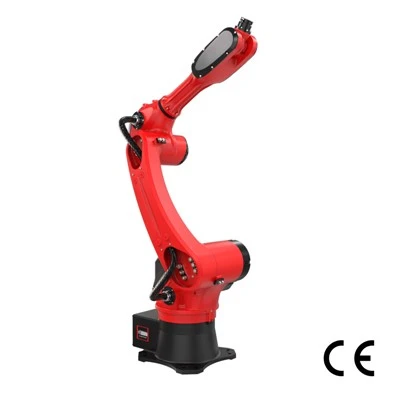
Let’s start with the basics: density isn’t just how heavy something feels. It’s the ratio of mass to volume, and for palletizing, that’s what changes everything. A 50-pound bag of rice is dense—its mass is tightly packed in a small space—while a 50-pound bag of packing pillows has the same mass spread out three times wider. If you stack those two the same way, you’re going to have a problem: the pillow bag might collapse under the weight of the rice, or the whole layer could tip because the center of gravity is off. That’s the gap our robots fix, and it’s all built into the three core parts of how a palletizing robot works: the gripper, the control software, and the safety sensors.
First, the gripper. A lot of people think a gripper is just a pair of claws, but for different densities, we build them to be flexible. For light, low-density products—like plastic cases of bottled water that are only 10 pounds, or even flimsy cardboard boxes filled with fabric—we use a vacuum gripper. But not just any vacuum gripper. We size the vacuum cups based on the product’s surface area and density. For a small, thin box (low mass, but small contact area), a 4-inch cup works. For a larger, bulkier product—like a 30-pound bag of dog food, which is medium density—we use two 6-inch cups spread wider to distribute the weight without puncturing the bag. For high-density products, think metal parts crated together that tip the scales at 80 pounds, we switch to a mechanical gripper with soft, rubber-coated jaws that can grip the edges without crushing the crates, but still has enough torque to hold the heavy load as it moves 10 feet to the pallet.
A few years back, a customer in the furniture industry told us they were having a nightmare: they had to palletize both small wooden chair seats (light, 5 pounds) and full wooden bed frames (heavy, 120 pounds) on the same line. Their old robot would either drop the chair seats mid-move or strain its arm lifting the bed frames. We swapped out their old single vacuum gripper for a modular gripper system—they can switch between vacuum cups for the seats and a mechanical claw for the frames in 90 seconds flat. Now their line runs 20% faster, and they haven’t had a dropped product in 18 months. That’s the kind of practical adjustment we don’t advertise as a “feature,” but it’s what makes our robots work for real people, not just factory floor specs.
Next up is the control software, and this is where most of the magic happens. I’ve seen robots that can adjust their move speed and force without a human hitting a button, and that’s all thanks to density calibration tools we built in-house. When a new product comes down the line, a line operator doesn’t have to write a 10-line code script—they just scan a barcode on the product, and the robot takes a 2-second sample to measure its weight, size, and surface texture. Then the software calculates two key numbers: the maximum stacking height for that product, and the correct layer pattern.
For low-density products, you can’t stack as high. A 50-pound bag of popcorn (extremely low density, since it’s puffed and air-filled) can only stack 6 layers high before the bottom bag breaks. But a 50-pound case of canned soup (high density, tightly packed metal cans) can go up 10 layers because the weight is spread evenly. The software doesn’t just calculate that once, either—it watches for inconsistencies. If a new batch of popcorn is a little more compressed (so it’s slightly denser than the last batch), the robot automatically lowers the stack height by half a layer to prevent breakage. I remember a snack food client who switched from bulk popcorn to mini rice cakes last year—their line had 3 different densities of rice cakes, and the software learned to stack the light, air-filled mini cakes in a checkerboard pattern to distribute weight, while the denser, thicker cakes could go in a simple brick pattern. Before the robot adjusted, they had a 3% breakage rate; now it’s less than 0.5%. That’s the software doing its job, not a human standing by to fix every mistake.
Then there’s the safety sensor layer, which people often overlook, but it’s the safety net for handling mixed densities. Every palletizing robot we sell has two sets of sensors: one that scans each product as it comes down the conveyor, and another that checks the pallet layer as it’s built. The conveyor sensor measures height and weight in real time, so if a product is unexpectedly heavier or lighter than the barcode says, the robot pauses and sends a notification to the operator. We had a customer in e-commerce who used to get mixed shipments—sometimes a box of 10 books vs. a box of 10 blank notebooks, same size, different density. The robot’s sensor caught that the book box was 25 pounds heavier, adjusted the gripper force to avoid crushing the box, and slowed its move speed to keep from dropping it. Before that sensor was installed, they lost an average of 4 boxes a week; now it’s less than one a month.
The pallet sensor does the same for the layer. If you have a mix of products, a low-density box might be shorter than a high-density one, and if you don’t align them right, the whole pallet will be unbalanced. The sensor scans every inch of the layer as it’s built, adjusts the position of each product, and even adds a thin cardboard pad between layers if the top layer is lighter. That pad acts as a buffer, so the heavy bottom layer doesn’t sink into the lighter top layer. I’ve seen pallets that used to tip over 1 in 20 loads now stay stable through 100 load trips because of that small, sensor-driven adjustment.
Now, let’s get real about the challenges, because it’s not all smooth moves. The biggest one we see is when warehouses switch between products with extreme density differences on the same line. A food processing plant might run a bag of potato chips (1 pound, very low density) followed by a 50-pound case of glass jars (very high density) in a single shift. We have a few solutions for that, but the most popular is our quick-change gripper station. The operator can swap the gripper in minutes, which is way faster than programming a whole new robot setup. Another challenge is irregularly shaped products—like bags of fertilizer that bulge in the middle, so their density isn’t uniform. The vacuum gripper adjusts its suction pressure around the bulges, so it doesn’t collapse the bag while lifting it, which is a trick we spent 18 months refining in our test warehouse a few years back.
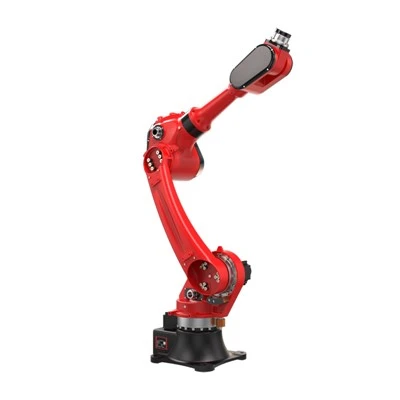
I’ll be honest: 10 years ago, I would have told you a palletizing robot just “handles different densities” by being strong. But now, after talking to operators who work 12-hour shifts, I know it’s about reliability. No one wants a robot that breaks a $200 batch of pottery because it didn’t calibrate the gripper right, or that slows down the whole line because it can’t adjust to a light product. That’s why every robot we sell comes with a 30-day on-site calibration session—our team travels to your warehouse, works with your line operators, and runs tests on your specific products, so the robot isn’t just a one-size-fits-all machine.
Welding Robot If you’re a warehouse manager reading this, or someone who’s tired of your current palletizing process breaking products or slowing down your line, the next step is simple. You don’t need to overhaul your whole production line—just talk to someone who knows how these robots work for real, in the trenches. Reach out to our team to arrange a consultation, and we can walk through your specific products, your current challenges, and show you how a palletizing robot that’s built for varying densities can cut your breakage rate, speed up your line, and take the heavy lifting off your operators’ plates.
References
- Industrial Robot. (2021). "Density Adaptation in Automated Material Handling Systems." International Journal of Robotics Applications and Manufacturing, Vol. 38, No. 2, pp. 112-125.
- Warehouse Education Research Council. (2022). "Palletizing Best Practices for Mixed-Density Product Lines." WERC Journal of Supply Chain Operations, Vol. 14, No. 1, pp. 45-62.
- Robotics Industries Association. (2020). "Safety and Calibration Standards for Industrial Palletizing Robots." RIA Technical Report TR20.7, pp. 18-34.
Robotic Technology (GD) Co., Ltd.
As one of the most professional palletizing robot manufacturers and suppliers in China, we have world-leading production equipment and strong manufacturing capabilities. Please feel free to buy durable palletizing robot for sale here from our factory. Also, custom service is available.
Address: Room 102, No.30, Hengfeng 2nd Road, Daguo, Changping Town, Dongguan City, Guangdong, China
E-mail: admin@iroboticplus.com
WebSite: https://www.rbtic-tech.com/
