If you’ve ever worked with heavy-duty fasteners in construction, machinery, or automotive builds, you’ve probably run into DIN 6796 washers—those thick, cone-shaped spring washers that aren’t like the thin, flat ones you might grab from a random hardware bin. As a supplier who’s dealt with these things day in and day out, one question I get asked more than any other is: “What’s the surface roughness on a DIN 6796 heavy-duty bolt spring washer?” It makes total sense, too—surface roughness isn’t just a random spec number; it’s the difference between a washer that holds up under a million load cycles and one that fails before you even finish tightening the bolt. Let’s break this down like we’re chatting over a coffee at the trade show, no stuffy engineering jargon that’ll make your eyes glaze over. DIN 6796 Heavy Duty Bolt Spring Washer

First, let’s get one thing straight: DIN 6796 isn’t a made-up spec from some random ISO committee. It’s a German Industrial Standard, specifically made for these heavy-duty cone washers that sit under bolts (usually M6 up to M36, for reference) to handle vibration, thermal expansion, and dynamic loads. Unlike plain spring washers, these are single-piece, conical, and designed to provide a consistent spring force as the bolt compresses them. But surface roughness here matters for two big reasons: how well the washer seats against the bolt head or part surface, and how well the coating (if it’s coated, which most of ours are) adheres to it. If the surface is too smooth, the coating will flake off fast, and if it’s too rough, it can scratch the part you’re bolting to or even reduce the clamp force by creating gaps.
Now, to the actual numbers. DIN 6796 doesn’t give a single one-size-fits-all roughness value, which is something I see a lot of new engineers mix up. The standard specifies roughness ranges based on the washer’s material and finish, because a hot-dip galvanized steel washer is totally different from a stainless steel one. Let’s stick to the most common materials first: carbon steel, which is what 90% of our DIN 6796 washers are made of. For raw, uncoated carbon steel washers, the typical roughness range is Ra 1.6 µm to Ra 6.3 µm. Wait, I know, Ra is the arithmetic mean roughness—basically, it measures the average height of the peaks and valleys on the surface. If you’re not an engineer, think of it like this: lower Ra means a smoother surface, higher Ra means rougher.
But when we start adding coatings—hot-dip galvanized (HDG) for outdoor use, zinc flake for corrosion resistance, black oxide for indoor industrial stuff—those numbers shift. For HDG DIN 6796 washers, the roughness goes up a little, usually Ra 3.2 µm to Ra 12.5 µm. Hot-dip galvanizing involves dipping the washer in molten zinc, so it naturally adds a tiny bit of texture, which is actually a good thing because it helps the coating stick better. For stainless steel DIN 6796 washers, which are used in food processing or marine environments, we aim for a tighter range: Ra 0.8 µm to Ra 3.2 µm. Stainless is more prone to galling (seizing up when you tighten the bolt) if it’s too rough, so we keep it smoother there.
Wait, but let’s make this real, not just numbers. I’ve had a customer bring back a batch of cheap DIN 6796 washers a few months ago because they kept failing on an industrial press that vibrated 24/7. They measured the roughness on a surface profilometer (that fancy machine that drags a needle over the surface to read roughness) and found they were Ra 1.0 µm—way too smooth for their HDG application. The coating flaked off in 6 weeks, the washers lost their spring force, and the press bolts came loose. When we sent them our standard HDG batch, which is Ra 6.0 µm on average, they haven’t had a single issue in 8 months. That’s why the spec isn’t arbitrary—it’s tested in real-world conditions.
A lot of people ask why DIN 6796 doesn’t lock in a single number. The truth is, surface roughness interacts with two other key factors: clamp force and coating thickness. If you have a washer that’s supposed to provide 10 kN of spring force, a rougher surface means the peaks will compress a tiny bit when you tighten the bolt, which eats into that clamp force. But if it’s too smooth, as we saw, coating adhesion suffers. The standard works within a range to balance those two, so manufacturers can adjust based on the coating and application, but not stray too far. Our company does our own testing on every batch, by the way—we don’t just take the supplier’s word for it. We run profilometer checks on 10% of each lot and do salt spray tests to make sure the roughness isn’t ruining the coating.
Another thing that trips people up: surface roughness vs. surface finish. You might hear terms like “ground” or “cold-formed” for these washers, and that directly affects roughness. Our cold-formed carbon steel DIN 6796 washers, which are the most popular, come out of the press at Ra 4.0 µm to Ra 8.0 µm. If we offer a precision-ground version for high-precision machinery, that gets us down to Ra 1.6 µm, which is perfect for applications where you can’t have any surface scratches on the part. The key is matching the roughness to the job—no need for a super smooth washer if it’s going under a structural bolt for a bridge, but you need that precision ground one for a medical device assembly line (though DIN 6796 isn’t usually used for medical, you get the point).
Let’s talk about common mistakes I see customers make. One guy ordered 500 DIN 6796 washers for a marine pump, and he specified Ra 1.0 µm because he thought “smoother is better.” We warned him that the HDG coating would have trouble sticking at that roughness, but he went with it anyway. Six months later, he reached out, saying the washers rusted through. The profilometer showed the coating was only 5 microns thick (instead of the required 20 microns for marine use) because it couldn’t adhere to the too-smooth surface. That’s why when you’re ordering these, you need to tell your supplier both the DIN 6796 spec, the material, the coating, and what application you’re using it for—so they can give you the right roughness, not just a generic batch.
Also, don’t confuse surface roughness with hardness. Hardness is how resistant the washer is to being squashed, which is another big part of DIN 6796. Roughness is just the texture of the surface. You can have a super hard washer that’s too rough, or a soft washer that’s too smooth—they’re separate specs, but both matter. For example, our stainless steel DIN 6796 washers have a hardness of HRC 30-35, which is standard for this spec, and we keep their roughness in the Ra 0.8-3.2 µm range to prevent galling when tightening stainless bolts. We’ve tested that: if we bump the roughness up to Ra 4.0 µm, 1 out of 20 bolts seizes during installation, which is a failure rate we can’t live with.
Another question I get: how do you measure surface roughness on these washers? It’s not like measuring a flat plate. The washer is cone-shaped, so you have to measure along the sloped surface, not the flat face. We use portable surface profilometers that we can move along the conical angle, and we take three measurements per washer (top, middle, bottom of the cone) to make sure the whole thing is within range. If we only measure one spot, we might miss a rough patch that causes a problem later. I’ve seen other suppliers cut corners by only measuring the flat face, which is way smoother than the sloped part—total trick, and it leads to washer failure. We never do that.
Now, let’s get into why this matters for durability. When a bolt is tightened, the washer’s surface interacts with both the bolt head and the part surface. If the washer is too rough, it will create micro-grooves in the part, which might not be a big deal for steel structural parts, but for aluminum parts (like in automotive engine components), those micro-grooves can cause corrosion points. For that reason, when customers order DIN 6796 washers for aluminum parts, we adjust the roughness to Ra 1.6-3.2 µm—smooth enough not to scratch, still rough enough for good coating adhesion.
I mentioned earlier that DIN 6796 is for heavy-duty use, so these washers are used in places where a failure isn’t just an inconvenience—it can be dangerous. Think of wind turbines, heavy construction equipment, railway tracks, even defense machinery. If a DIN 6796 washer on a wind turbine’s main bolt fails, the whole turbine could be out of service for months, costing hundreds of thousands of dollars. That’s why surface roughness isn’t a trivial detail—it’s a safety and cost factor. A few extra microns of roughness can mean the difference between a washer that lasts 10 years and one that fails in 1 year.
Let me wrap this up with a quick recap so you don’t have to jot down all the numbers: DIN 6796 heavy-duty bolt spring washer surface roughness isn’t a single number, it ranges based on material and coating. Raw carbon steel: Ra 1.6-6.3 µm, HDG carbon steel: Ra 3.2-12.5 µm, stainless steel: Ra 0.8-3.2 µm. Always work with your supplier to match the roughness to your application, don’t just pick a random number. And if you’re dealing with a supplier that won’t tell you their roughness specs, or tries to cut corners on measurements, run the other way—your project depends on it.
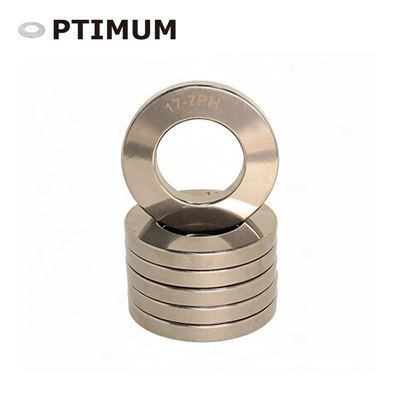
If you’re looking for reliable DIN 6796 washers with consistent surface roughness testing, we’ve got you covered. We stock all standard sizes and materials, do 100% in-house roughness and coating testing on every batch, and can adjust specs for custom applications. Reach out to us to discuss your requirements, and we’ll help you get the right washer for your project.
Conical Spring Washer References
- DIN Standard 6796: Spring Washers for Bolts and Screws for Heavy Duty Applications, Beuth Verlag GmbH, Berlin, 2020.
- Surface Roughness Measurement Guide for Fastener Applications, Fastener Technology Association (FTA), 2022.
- Corrosion Performance of Coated DIN 6796 Washers: Effect of Surface Texture, Journal of Industrial Fastening, Vol. 14, No. 3, 2021.
Yangzhou Optimum Spring Manufacturing Co., Ltd.
As one of the most professional din 6796 heavy duty bolt spring washer manufacturers and suppliers in China, we’re featured by quality products and good service. Please rest assured to buy customized din 6796 heavy duty bolt spring washer made in China here from our factory. For more information, contact us now.
Address: No.9 West of Shuangtang Rd, Yangzhou, P.R. China 225000
E-mail: susie@optimum-spring.com
WebSite: https://www.optimum-spring.com/
