If you’ve ever wandered through a cozy, wood-paneled basement bar in St. Petersburg, a family-run game hall in Moscow, or even a small-town community center in Siberia, you might have spotted a game that looks a little familiar at first glance—and totally different once you lean in. It’s not 9-ball, it’s not 8-ball, and it’s certainly not the standardized British or American pool tables you’ll find in most chain sports bars. That’s a Russian pool table, and as someone who’s spent the last 15 years supplying these tables to game halls, community centers, and private collectors across Eastern Europe and beyond, I’m here to cut through the confusion and explain exactly what makes these tables more than just a “foreign version” of the pool you might know. Russian Pool Table
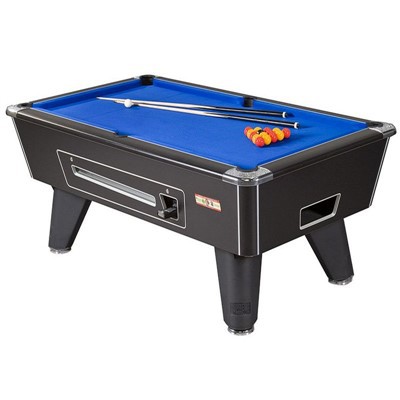
Let’s start with the basics: the official term for the game played on these tables is Russian pyramid (or “bilyard” in Russian), but for suppliers and players alike, “Russian pool table” is the common name we use. What sets it apart from every other pool or billiards variant starts with the table itself. Unlike the 9-foot, 8.5-foot, or oversized 10-foot tables standard in American and British pool, Russian pyramid tables are almost always 12 feet long by 6 feet wide—double the length of a standard 8-foot American pool table, and way larger than any bar-size table you’ve ever tried to line up a shot on. This extra length isn’t arbitrary; it’s core to how the game is meant to be played. The longer playing surface means shots require more precision, not more brute force, and the table’s slate is a full piece of Italian or Belgian bluestone (we source the best slate from quarries in Tuscany for our tables, since it’s denser and warps far less than lower-quality slate) rather than the three-piece slate used for many Western pool tables. A warped slate is a death sentence for pyramid play—even a 1/16-inch warp can throw off a shot from three feet out—so we take extra care when installing and leveling every table we ship, a detail most casual suppliers skip over.
Next come the balls, and this is where the real difference hits. Western pool uses small, 2.25-inch balls that fit neatly into the table’s pockets, but Russian pyramid uses massive, 2.625-inch balls—almost 20% larger than American pool balls. These aren’t the glossy, plastic-coated balls you’d find in a discount set, either. Our tables come with premium phenolic resin balls, the same material used for high-end tournament sets, that weigh just over 280 grams each—heavier than standard pool balls. The extra weight means balls roll straighter, hold their line even over small imperfections in the table cloth, and knock each other with a satisfying, solid thud that’s a hallmark of the game. The cloth is another key component: Western pool tables usually use a 21-ounce worsted wool blend, but Russian pyramid tables require a 25-ounce wool-nylon blend, stiffer and slower, to reduce the speed of the large, heavy balls. On a Western pool table, you could sink a ball with a hard, fast shot; on a Russian pool table, that same shot would overshoot the pocket by a foot or more—so precision, not power, is the name of the game.
Then there are the pockets, and they’re not what you’d expect. Western pool pockets are sized for small balls, with wide openings that make sinking shots relatively easy (for experienced players, at least). Russian pyramid pockets are smaller, tighter, and shaped like a rounded teardrop, designed specifically for those 2.625-inch balls. The pocket openings are only 3.5 inches wide at their narrowest point, so even a slight misalignment on a shot will send the ball bouncing back onto the table rather than into the hole. We install pocket liners made of thick, durable leather on every table we supply, not the flimsy vinyl used for many budget Western tables, because the large balls scrape against the liner every time they’re shot. A cheap liner will wear out in a few months, but our leather liners last years with regular use—an investment game hall owners tell us pays for itself in the long run.
Now, you might be wondering: if it’s so different from Western pool, why does it matter? For one thing, Russian pyramid isn’t just a casual game. It’s a national pastime in Russia, Belarus, Ukraine, and many other former Soviet countries, with professional tournaments that draw thousands of viewers and prize pools that rival major Western pool events. The Russian Pyramid Federation hosts a national championship every year in Moscow, with players competing in front of packed arenas, and many regional leagues run weekly games at local bars and community centers. For small business owners in these regions, a Russian pool table isn’t just another amenity—it’s a draw that brings in regular customers who’d otherwise go to a bar with a standard dartboard or a TV. I’ve had bar owners tell us that adding a Russian pyramid table increased their weekend revenue by 40% in the first six months, because players will travel across town to compete in weekly leagues, bring friends, and spend money on drinks and food while they play.
Beyond professional and casual play, there’s a growing interest in Russian pyramid outside the former Soviet Union. Over the last decade, expat communities in Germany, the United States, and Israel have embraced the game, and many community centers and game halls in those countries have started adding Russian pool tables to their offerings. We’ve shipped tables to a community center in Brooklyn, New York, and a sports bar in Berlin, Germany, and the owners tell us the tables have become the most popular spot in their space—even among non-Russian players, who are drawn to the game’s focus on skill rather than luck (unlike some Western pool variants, where bank shots depend a lot on the table’s cloth and angle). As someone who’s been in this industry for years, I can tell you this isn’t a fad. The game has a rich history, and once you play on a proper Russian pool table, it’s hard to go back to smaller, faster Western tables.
But here’s the thing about being a supplier of Russian pool tables: we don’t just sell a table—we sell a piece of a cultural tradition. When a small town in Kazakhstan orders a table, they’re not just getting a piece of furniture for their community center; they’re getting a space where teenagers can meet after school, where elders can gather to play a game they’ve loved for decades, and where the whole community can host tournaments and celebrations. When a bar owner in Toronto orders a table, they’re giving their expat customers a space to feel at home, and introducing a new group of people to a game that’s far more engaging than they expected. That’s why we’re so careful about the tables we supply. We don’t cut corners on materials, we don’t use cheap slate or thin cloth, and we don’t rush installations—because every table we ship is going to be a centerpiece for someone’s community, not just a piece of equipment.
If you’re a bar owner, community center manager, or private collector looking to add a Russian pool table to your space, you might have questions. How much space do I need? A full-size table needs at least 16 feet of length and 12 feet of width around it for players to line up shots comfortably—no way around that, since a standard pool cue is 58 inches long, and you need room to swing it. Can I play other games on it? Technically, yes—though the pockets and cloth are tuned for pyramid play, and small Western balls won’t fit the tight pockets. Most customers stick to the game they ordered the table for, and that’s what they love about it. How long does it take to install? A full installation takes two to three days, including leveling the slate, stretching the cloth, and setting up the pockets—we don’t leave until the table is perfectly aligned, and we provide a quick training session for your staff so they know how to care for the table and adjust it if needed.

We also offer custom options for customers who want to make their table unique. For game halls that want a more traditional look, we can build tables with solid oak frames, carved legs, and felt in classic green or red. For private collectors, we can use walnut or mahogany frames, custom logos, even personalized pocket liners. No two tables we supply are exactly the same, because every customer has different needs and tastes. We also offer maintenance packages for clients who need help with table care—re-stretching cloth, leveling slate, replacing balls or pockets—because we want our tables to last for decades, not just a few years.
Pool Dawg Cues At the end of the day, a Russian pool table is more than just a larger, heavier version of Western pool. It’s a game that’s rooted in history, skill, and community, and a table that’s built to last. If you’re ready to bring this classic game to your space, or you have questions about sizing, materials, or customization, we’re here to help. Reach out to our team to discuss your needs, get a quote, or learn more about how a Russian pool table can elevate your space and draw in customers. Whether you’re running a small neighborhood bar or a large community center, a Russian pool table is an investment that will pay off for years to come.
References
- Russian Pyramid Federation. Official Rules of Russian Pyramid. Moscow: 2022.
- Billiards Congress of America. Comparative Analysis of Global Billiards Variants. Chicago: 2019.
- International Sports Journal. “The Cultural and Economic Impact of Russian Pyramid Across Eurasia.” Vol. 14, No. 2, 2021.
Shuai Zhanjiang (Dongguan) Co., Ltd.
As one of the leading russian pool table manufacturers and suppliers in China, we offer a wide range of products with superior quality. Please rest assured to buy russian pool table made in China here from our factory. We also accept customized orders.
Address: No. 50 Siyuan Road, Changping Town, Dongguan City, Guangdong Province
E-mail: cbibilliard01@gmail.com
WebSite: https://www.cbibilliard.com/
