As a supplier of PV guide rails, I’ve often been asked whether our products can be used in desert areas. This question is of great significance because deserts are vast spaces with high solar irradiance, making them potentially ideal locations for large – scale photovoltaic (PV) power plants. In this blog, I’ll delve into the feasibility of using PV guide rails in desert areas from multiple aspects. PV Guide Rail
Environmental Adaptability
Desert areas are characterized by extreme environmental conditions. The temperature difference between day and night is significant. During the day, the scorching sun can heat the ground and equipment to extremely high temperatures, sometimes reaching over 50 degrees Celsius. At night, the temperature can drop sharply. This large temperature variation can cause materials to expand and contract, which may lead to structural damage over time.
Our PV guide rails are made of high – quality aluminum alloy or steel. Aluminum alloy has excellent thermal conductivity, which helps in dissipating heat during the hot days in the desert. It also has a relatively low coefficient of thermal expansion, reducing the risk of deformation due to temperature changes. Steel guide rails, on the other hand, offer high strength and durability. They can withstand the mechanical stress caused by the expansion and contraction cycles. We use advanced heat – treatment processes on our steel guide rails to enhance their resistance to thermal fatigue.
Another environmental factor in deserts is the high level of sand and dust. Sandstorms are common, and the fine sand particles can cause abrasion to equipment. Our PV guide rails have a protective coating. For aluminum alloy guide rails, an anodized coating is applied. This coating not only provides a hard and smooth surface that resists sand abrasion but also acts as a barrier against corrosion. For steel guide rails, we use a hot – dip galvanizing process followed by a polyester powder coating. The zinc layer provides sacrificial protection against rust, and the powder coating further enhances the resistance to abrasion and environmental corrosion.
Structural Stability
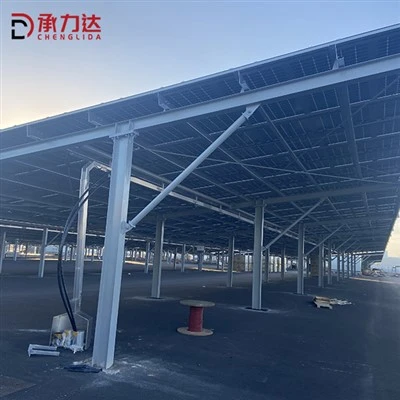
In desert areas, wind is a major concern. Strong winds can exert significant forces on PV panels and their supporting guide rails. Our PV guide rail systems are designed with a high – strength structure. The cross – section design of the guide rails is optimized to provide maximum resistance to wind loads. We use advanced engineering software to simulate different wind scenarios, including hurricane – like conditions that may occur in some desert regions.
The installation method of our guide rails also contributes to the overall stability. We provide a secure and reliable mounting system. The guide rails are firmly fixed to the ground using specialized foundation structures. In sandy desert areas, we recommend using screw piles or ballast foundations. Screw piles can be easily installed by screwing them into the ground, providing a stable anchor for the guide rails. Ballast foundations, made of concrete or heavy stones, can counterbalance the uplift forces caused by strong winds.
Compatibility with PV Panels
Our PV guide rails are designed to be highly compatible with a wide range of PV panels. Different PV panels have different sizes, weights, and mounting requirements. Our guide rails feature an adjustable design. The spacing between the mounting holes on the guide rails can be adjusted to fit various panel sizes. This flexibility ensures that our guide rails can be used with different types of PV panels, whether they are monocrystalline, polycrystalline, or thin – film panels.
We also pay attention to the electrical insulation between the PV panels and the guide rails. In desert areas, the dry climate can increase the risk of static electricity buildup. Our guide rail systems are equipped with high – quality insulating components to prevent electrical short – circuits and ensure the safe operation of the PV power plant.
Maintenance Requirements
One of the advantages of using our PV guide rails in desert areas is the relatively low maintenance requirements. The protective coatings on the guide rails significantly reduce the need for frequent cleaning and maintenance. However, periodic inspections are still necessary.
Inspections should be carried out at least twice a year. During these inspections, the integrity of the guide rails’ structure, the condition of the protective coatings, and the tightness of the mounting bolts should be checked. If any signs of damage or corrosion are found, timely repairs or replacements should be made. We also provide detailed maintenance manuals to our customers, guiding them on how to carry out proper maintenance.
Cost – effectiveness
When considering the use of PV guide rails in desert areas, cost – effectiveness is an important factor. Our PV guide rails are priced competitively without sacrificing quality. The long – term durability of our guide rails means that the replacement frequency is low, reducing the overall cost of the PV power plant over its lifespan.
In addition, the ease of installation of our guide rail systems also helps to save on labor costs. Our guide rails come with pre – drilled holes and easy – to – understand installation instructions, allowing for quick and efficient installation in desert areas.
Case Studies
Several PV power plants in desert areas have already successfully used our PV guide rails. For example, in a large – scale PV project in the Sahara Desert, our aluminum alloy guide rails were installed. After several years of operation, they have shown excellent performance. The power generation efficiency of the PV panels has remained stable, and there have been no major issues with the guide rails’ structure or corrosion.
In another project in the Mojave Desert, our steel guide rails were used. The project area is prone to strong winds, but the high – strength guide rail system has withstood the test of wind and sand. The power plant has been operating smoothly, contributing to the local power grid.
Conclusion

In conclusion, our PV guide rails can be effectively used in desert areas. Their excellent environmental adaptability, structural stability, compatibility with PV panels, low maintenance requirements, and cost – effectiveness make them a suitable choice for PV power plants in these harsh environments.
Photovoltaic Accessories If you are planning a PV project in a desert area or any other location, and you are interested in our PV guide rails, I encourage you to contact us for further information and a detailed product consultation. We are ready to provide you with the best solutions and support for your project.
References
- "Handbook of Photovoltaic Science and Engineering", edited by Antonio Luque and Steven Hegedus.
- "Desert Ecosystems: Environment and Producers", by Saugata Dutta.
Wuxi Chenglida Machinery Co., Ltd.
We are one of the most professional pv guide rail manufacturers and suppliers in China, also support customized service. Please feel free to buy durable pv guide rail made in China here from our factory. Quality products and reasonable price are available.
Address: No.4 Ruifeng Road, Huishan District, Wuxi City
E-mail: postmaster@wxcldjx.com
WebSite: https://www.wuxi-chenglida.com/
