Hey everyone, and welcome back to my little corner of the web where we cut through the jargon and talk real stuff about biomass gear. I’m Jake, and if you’ve been around here before, you know I run a biomass pellet mill supply business—no fancy corporate red tape here, just honest questions from folks who actually need to get stuff done. Today, I’m tackling one of the most common (and most important) questions I get emailed about every single week: Can a biomass pellet mill actually work with agricultural waste? Biomass Pellet Mill

First off, let’s get one thing straight—this isn’t some gimmick or a new-age trend. Agricultural waste? That’s the leftover stuff farmers and ag operations have piling up after harvest, right? Corn stover, wheat straw, rice husks, sugarcane bagasse, even stuff like sunflower stalks or cotton stalks. For years, most of that just got burned in fields (hello, air pollution) or hauled to landfills where it rots and releases methane. But with a biomass pellet mill? We turn all that messy, useless waste into high-density pellets that heat homes, power small industries, and even help with carbon goals. But does it actually work? Let’s break this down like we’re sitting at a coffee shop, no textbook equations required.
Let’s start with the basics of how a biomass pellet mill works, because if you get that, you’ll get why agricultural waste is such a perfect feedstock. A pellet mill basically crushes dry, organic material into a fine powder, then forces that powder through small, round dies (think giant metal colanders with holes) using a roller system. The friction from all that pressing heats the material just enough to activate the natural lignin in plants—kind of like how bread dough gets stretchy when you knead it—so it binds together without any additives. No glue, no chemicals, just plant stuff.
Now, agricultural waste—wait a second, that’s mostly made of the same plant fibers as wood, right? Wood has lignin, and so does straw, stover, bagasse. So why wouldn’t it work? I’ve seen this firsthand with my own clients. Last year, a small farm in Iowa hit me up because their corn crop produced way more stover than they could sell as animal bedding or use for mulch. They were burning 20 acres of it every harvest and getting fined by the state for air quality issues. They rented a pellet mill first (don’t get me started on how many people skip buying and rent and end up with inconsistent results) and ran tests on their own stover. First time, they got pellets that burned just as hot as wood pellets—like 4,500 to 5,000 BTUs per pound, same as premium hardwood pellets. They ended up buying a used mill from me, now they sell their extra pellets to a local heating coop, and they stopped burning that stover. Win-win, right?
But hold on—this isn’t “plug and play,” and I don’t sugarcoat that to my clients. Agricultural waste isn’t all the same, and you can’t just dump wet corn stalks into a mill and expect perfect pellets. That’s where most new folks mess up, so let’s talk about the gotchas. First, moisture content. Any organic feedstock needs to be around 10-15% moisture for pelleting—way higher than that, and it will clog the dies, cause the pellets to crumble, and even grow mold. Agricultural waste straight from the field is usually 20-35% moisture, especially if it rained after harvest. So you need a dryer. That’s not a separate, complicated machine if you get the right mill—many modern ones pair with a small rotary or hot-air dryer that’s tailored for ag waste. Second, material uniformity. Straw is long and stringy, right? If you run it through the mill without chopping it up first, it will wrap around the rollers and jam everything. Most good pellet mills come with a pre-chopper or a hammer mill that cuts the ag waste into 1-2 inch pieces before pelleting. I always tell my clients: skip the cheap off-brand mills that don’t have integrated prep gear—you’ll spend more time fixing jams than making pellets.
Another big point: the different types of agricultural waste and how they play with mills. Rice husks, for example—super fine, low lignin? Wait, no, actually rice husks have lignin, but they’re really hard and abrasive. If you run a high-throughput mill with cheap steel dies on rice husks, those dies will wear out in weeks. I recommend mills with hardened alloy dies for abrasive feedstocks like rice husks or nut shells. Wheat straw is softer, so it works with standard dies, but it’s more fibrous so you might need a slightly higher pressing pressure than with wood. Sugarcane bagasse—wait, that’s from sugarcane processing, it’s super wet when it comes out of the mill, so it needs extra drying time, but once it’s dry, it makes amazing pellets because it’s got a lot of natural sugars that act as a binder, so you don’t even need to add anything extra. I had a client in Louisiana who runs bagasse pellets for a local ethanol plant—they told me their mill runs 12 hours a day, 6 days a week, with zero issues as long as they keep the moisture right.
What about emissions? People ask me all the time—are these pellets from ag waste better than wood? Let’s be real: both are biomass, so they’re renewable (as long as you’re not taking all the waste, which would hurt soil health). But pellets from ag waste actually have a lower carbon footprint than wood pellets, because the waste would otherwise rot or burn, releasing more methane or CO2. Plus, burning ag waste pellets produces way less sulfur and nitrogen oxide than coal or even fossil fuel heating. And when you burn them, the CO2 released is the same CO2 the plants absorbed while growing, so it’s a closed loop. That’s a huge deal for farms that want to go green and avoid the carbon taxes some regions are putting on fossil fuels.
Wait, but let’s not ignore the challenges, because I don’t want anyone to get the wrong idea. The upfront cost of a biomass pellet mill can be steep, right? For a small farm (100-200 acres of row crops), a mid-sized mill runs between $15,000 and $30,000, plus the dryer. But most of my clients pay that off in 12-18 months just from getting rid of waste disposal fees and selling extra pellets. A farm in Ohio told me they were paying $8,000 a year to haul away straw—now they sell $15,000 worth of pellets a year, and keep $7,000 in profit. That math adds up fast. For larger operations, like sugar mills or rice processing plants, they can buy industrial-scale mills that run tons of waste a day, turning that waste into a full-time revenue stream.
Another thing I see people messing up: they think they can use any old pellet mill meant for wood on ag waste. Wood is denser, has different fiber structure, so the die size and pressure are different. I test every mill I sell with client-specific ag waste samples first—last month, I had a client with sunflower stalks, which are way more fibrous than corn stover. I ran a test batch on a standard die, and the pellets crumbled. So I swapped in a die with larger holes and slightly higher pressure, and boom—perfect, dense pellets. That’s why I never sell a mill without walking the client through the prep steps and testing their feedstock, even if it takes an extra week. I’d rather adjust the setup up front than have a client call me a month later saying their mill is broken.
Let’s talk about real-world results, not just theory. The US Department of Energy did a study a few years back on ag waste pelleting, and they found that rice husk and wheat straw pellets have a thermal efficiency of over 90% in modern furnaces, same as wood pellets, and lower emissions. They also found that small-scale pellet mills (under 5 tons per hour) are cost-competitive for agricultural operations, with payback periods under 2 years for most. And here’s a stat I like: the UN Food and Agriculture Organization says that agricultural waste has the potential to replace up to 10% of global fossil fuel use for heating and electricity, if we process it into pellets. That’s not a niche product—that’s a massive industry.
Now, should everyone run out and buy a pellet mill tomorrow? No, obviously. You need to assess your waste volume first. If you only have 10 acres of corn, the waste might not be enough to justify a mill—you can sell it as animal bedding instead. But if you have 50+ acres, or you’re a processing plant with tons of rice husks or bagasse, it’s a no-brainer. And even if you don’t want to buy, many regions have co-ops where multiple farms share a pellet mill, splitting the cost and the revenue.
Let’s wrap this up, because I don’t want to ramble too long. Can a biomass pellet mill work with agricultural waste? Absolutely—if you get the right mill, prep the feedstock correctly (dry it, chop it up), and manage the setup for your specific type of waste. It’s not a magic fix for every waste problem, but it’s one of the most practical, profitable, and eco-friendly ways to turn something that would otherwise be a headache into a valuable product.
If you’re a farmer, ag manager, or small business owner who’s got a pile of agricultural waste sitting around, and you want to learn more about how a pellet mill could work for you—hit me up. I don’t do hard sells, and I won’t promise you a miracle. I’ll send you a free feedstock test, walk you through the cost breakdown, and even connect you with a couple of my clients who are running their mills successfully. No pressure, just honest advice from someone who’s been in this game for years.
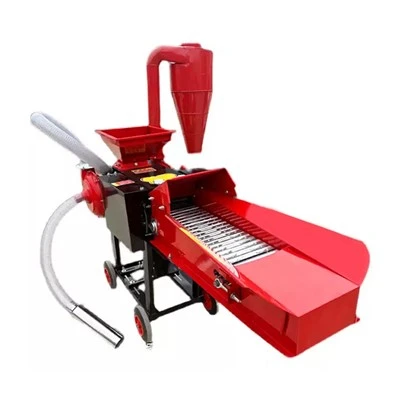
Multifunction Chaff Cutter References
- U.S. Department of Energy. (2021). Agricultural Waste Pelletization: Technical and Economic Viability for Small-Scale Operations. Office of Energy Efficiency & Renewable Energy.
- Food and Agriculture Organization of the United Nations. (2022). Global Potential of Agricultural Residues for Bioenergy Production. Bioenergy and Biochemicals Branch.
- Biomass Thermal Energy Council. (2020). Comparison of Emissions and Efficiency for Agricultural Waste vs. Wood Pellets. Annual Industry Report.
- Iowa State University Extension. (2021). On-Farm Pellet Mill Use for Corn Stover and Wheat Straw: Case Studies from Midwestern U.S. Farms. Extension Agricultural Engineering Series.
Zhengzhou Xinyihaotong Machinery Manufacturing Co., Ltd.
As one of the most professional biomass pellet mill manufacturers in China, we also support custom service. We warmly welcome you to buy high quality biomass pellet mill for sale here from our factory. For price consultation, contact us.
Address: Rooms 2301–2312, Jiayi Building, Xinxiang City, Henan Province, China
E-mail: zhaoyixuan5566@gmail.com
WebSite: https://www.xyhtmachinery.com/
