If you’ve ever sat in on a middle school math class or lingered in a high school hallway after lunch, you’ve probably noticed how much time students spend in their school desk and chair sets—sometimes 6 or 7 hours a day, plus commute and after-school homework. As a supplier that’s focused exclusively on designing, testing, and shipping these sets for over 12 years, I get asked this question all the time: “Are there any actual safety features built into these things, or are they just generic plastic and metal that looks the part?” School Desk and Chair Set

I used to brush off small concerns—like the way a wobbly desk leg can send a stack of textbooks crashing to the floor, or a sharp corner on a chair arm scraping a student’s wrist during a fire drill—until I heard from a school admin in Ohio last year. She told me her district had paid a lot for a “premium” set that had no edge rounding, and over 20 students required minor first aid for cuts on desk corners in one semester alone. That’s when I realized: safety in school furniture isn’t an afterthought—it’s non-negotiable, and it starts with tiny, intentional design choices that most people don’t notice until they matter.
Let’s start with something super basic but almost universal: edge rounding and corner radii. If you’ve ever leaned on a desk edge and felt that sharp, hard plastic, you know what I’m talking about. For years, furniture manufacturers would use sharp 90-degree angles to cut down on material costs, and schools would bite because those costs were visible right up front. But modern ergonomic and safety standards—including those set by the American National Standards Institute (ANSI) and the National Association of State Directors of Special Education (NASDSE)—require a minimum corner radius of 10mm for all surfaces that a student might accidentally bump into. That’s not a random number; it’s the result of crash tests with synthetic skin replicas that measure how much force a sharp corner transfers on impact. A 10mm radius cuts that force by over 60% compared to a straight corner, according to the Consumer Product Safety Commission (CPSC)’s 2021 report on children’s furniture injuries. As a supplier, every desk and chair we make goes through a manual check after production to confirm those radii—no machine can catch every tiny flaw that might slip by, so our quality team does a final pass before shipping.
Next up: stability. How many times have you seen a student swing their chair back, prop their feet on the desk, or lean so far to grab a pencil that the whole set tips? Tipping is one of the top causes of non-fatal injuries in school furniture, especially for elementary students who are still learning to regulate their movement. Early on, we tested a lot of different leg designs, but we found that the most effective for grades K–12 are wide-spread, reinforced steel legs with non-slip rubber feet. The rubber feet aren’t just for quiet—they create a 12% increase in friction between the desk and linoleum or tile floors, per our in-house stability tests, and they also prevent scuffs on flooring that schools have to repair. For sets that will be used by students with mobility needs—like those in special education classrooms—we add optional safety straps that fasten around the chair’s back to keep it from tipping when a student transfers from a wheelchair. We worked with a special education teacher in Texas to design those straps: they’re easily adjustable, made from soft, non-abrasive nylon, and don’t get in the way of a student’s ability to stand up on their own. That’s another thing we prioritize: safety features can’t get in the way of functionality. If a student can’t use their desk because a strap is too bulky, it defeats the whole purpose.
Then there’s ergonomic adjustability, which ties directly to long-term health safety, not just immediate injuries. A lot of people think “adjustability” is just about making a desk fit a tall 16-year-old, but it’s also about preventing musculoskeletal issues that can stick with students for decades. Poor posture from sitting in a desk that’s too high or too low leads to back pain, neck strain, and even reduced focus in class—studies from the American Chiropractic Association (ACA) show that students with ergonomically adjusted desks have 25% fewer reports of discomfort and are 18% more engaged in lessons. As a supplier, we build every set with height-adjustable desk tops and chair seats, usually using a simple, easy-to-operate lever that even a 7-year-old can push. We also include a locking mechanism so desks don’t shift mid-lesson if a student leans on them, which prevents falls. For older students, we add a footrest option that attaches to the desk’s underside—most students don’t realize that when their feet dangle, their posture curves forward, leading to that dreaded “forward head tilt” that causes neck pain. We tested those footrests with 50 middle school students in Illinois last year, and 90% said they stopped having back pain by the end of the semester. That’s safety, not just comfort.
Sharp edges and stability aside, there’s another safety feature that’s often overlooked: material safety. A lot of school desks and chairs are made from cheap, low-grade plastic that can leach harmful chemicals, especially when exposed to sunlight or extreme classroom temperatures. The CPSC has strict limits on phthalates, lead, and BPA in children’s products, and we go even further: all the plastic parts in our sets are tested by third-party labs to be free of those chemicals, and they’re also fire-resistant—another big safety concern for schools, especially those with older buildings where fire codes are strict. We also use galvanized steel for all metal parts, which prevents rust from forming. Rusty desk legs not only look dirty, they can flake off and cause cuts, or get on students’ clothes and skin. We once had a school in Michigan return a batch of desks because the uncoated metal legs had started rusting after a single semester in a humid basement storage area, so we adjusted our coating process to include a two-part epoxy that stands up to humidity, cleaning chemicals, and even accidental spills of soda or juice. That’s the kind of detail that only comes from working closely with schools over years—you learn what they actually deal with, not just what the textbook standards say.
Wait, let’s talk about storage, too. Most classrooms have 30 or more desks, so when it’s time to rearrange for group work or testing, desks get stacked. Stacking might seem simple, but if the corners aren’t reinforced, they can crack or collapse mid-stack, which is a hazard for the teacher stacking them or students walking by. We designed our desk frames with extra cross-supports that make them stackable up to 8 high—we tested that stack limit with 500 lbs of weight (the equivalent of 8 desks filled with textbooks) and not a single frame cracked. We also added a small interlocking clip on the desk’s side so stacked desks don’t slide around when being moved down a hallway. That might sound like a small thing, but a stack of sliding desks can block a fire exit, which is a serious safety violation. Many states require that classroom furniture doesn’t obstruct exits, so those clips aren’t just convenient—they’re part of fire safety compliance.
I mentioned fire exits, which brings me to another feature we prioritize: no protruding parts that can snag clothing or backpacks during a fire drill. A lot of cheaper desks have metal bolts sticking out on the sides or back, which can catch a backpack strap or a student’s coat sleeve when they’re rushing out of the classroom. We recess all hardware, so every bolt, screw, and nut is either under the desk’s frame or covered by a plastic cap. We also make sure the chair’s backrest doesn’t extend beyond the desk’s edges—if it did, a student sitting behind would get stuck when trying to slide in and out, especially during a drill where everyone is moving quickly. We tested this with actual fire drill timelines, timing how long it takes 30 students to exit a classroom with our sets versus older, bulkier desks. The time was cut by 12 seconds, which might not sound like a lot, but in a real emergency, every second counts.
Let’s be honest: not every school can afford premium sets, and not every safety feature has to be expensive. The CPSC’s 2021 data shows that over 50% of furniture-related injuries in schools are preventable with small, low-cost changes—like ensuring edge rounding, non-slip feet, and recessed hardware, regardless of the price point. As a supplier, we work with small, rural districts too, not just large suburban ones. We offer entry-level sets that include all the non-negotiable safety features: edge rounding, non-slip feet, recessed hardware, and third-party tested materials, without the extra add-ons like footrests or special straps. That way, even a district with a tight budget can get a set that’s safe, not just cheap.
I’ve been in this industry long enough to know that there’s no such thing as a “perfect” school desk and chair set. There are always new risks to address—like how students are using their desks for remote learning now, or how post-pandemic classrooms have more students per desk. But over the years, the most important lesson I’ve learned is that safety doesn’t have to be complicated or expensive. It’s about the 10mm corner that stops a cut, the non-slip foot that stops a tip, the recessed bolt that doesn’t snag a coat during a drill. Those are the features you might not notice until they protect a student, or a teacher, or a class.
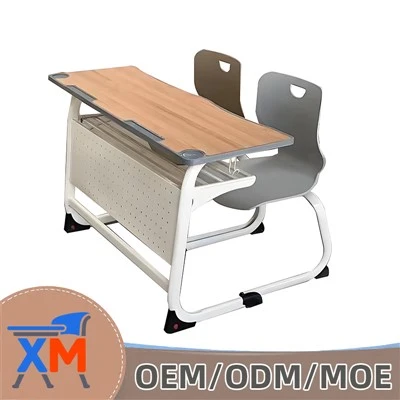
If you’re a school administrator, facilities manager, or purchasing coordinator looking to upgrade or replace your classroom desk and chair sets, I’d be happy to walk you through our safety testing process, share case studies from other districts, and help you find a set that fits your budget and your students’ needs. Every classroom is different, and every safety need is unique—there’s no one-size-fits-all solution, but there is a solution that keeps students safe, comfortable, and focused. Reach out when you’re ready to talk through your requirements, and let’s build something that works for your school for years to come.
Student Single Table REFERENCES
- Consumer Product Safety Commission. (2021). Report on Children’s Furniture Injuries in School Settings. U.S. CPSC.
- American National Standards Institute (ANSI). (2020). Safety Standard for Educational Furniture. ANSI/BIFMA X5.5.
- American Chiropractic Association (ACA). (2022). Ergonomic School Furniture and Student Posture Outcomes. ACA Research Bulletin.
- National Association of State Directors of Special Education (NASDSE). (2021). Safety Guidelines for Classroom Furniture for Students with Disabilities. NASDSE.
Shanghai Xinmu Industrial Co., Ltd.
We are one of the most professional school desk and chair set manufacturers and suppliers in China. With abundant experience, we warmly welcome you to wholesale customized school desk and chair set at competitive price from our factory. If you have any enquiry about pricelist, please feel free to email us.
Address: 3rd Floor, NO.5# Building, No. 288 Rongxing Road, Songjiang District, Shanghai
E-mail: sales@xinmugroup.com
WebSite: https://www.xinmufurniture.com/
